
Inside the discovery of semaglutide
A chance encounter with peptide chemistry led a team of Novo Nordisk scientists on a seven-year journey to create one of modern medicine’s most transformative treatments.
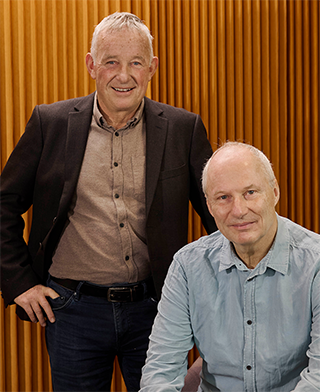
Thomas Kruse still remembers the moment he was asked to park his expertise in organic chemistry and move into peptides. It was spring 2002, and the Danish researcher had spent nearly a decade crafting small molecules in Novo Nordisk’s laboratories. But his boss, then-Chief Scientific Officer Mads Krogsgaard Thomsen, had a different vision – one that would ultimately reshape how the world treats obesity and diabetes.
“I sometimes describe myself as one of Mads Krogsgaard’s guinea pigs,” Thomas jokes. The transition to peptide engineering wasn’t easy, but this reluctant shift would become the foundation for the creation of semaglutide, a medicine now changing millions of lives worldwide.
By late 2002, Thomas had been joined by Jesper Lau, another chemist who shared the daunting task of establishing Novo Nordisk’s new protein and peptide engineering department. Together with laboratory technician Paw Bloch (who is now enjoying his retirement) and a team of “repurposed” small molecule scientists, they embarked on a seemingly impossible task: creating a once-weekly injectable GLP-1 receptor agonist.
The scientific challenge was formidable. Natural GLP-1 – which stimulates insulin production and regulates appetite – has a half-life of just minutes; far too short for therapeutic use. The team needed to extend this dramatically whilst maintaining potency. Years of painstaking work followed. The team synthesised compound after compound. Semaglutide was compound number 217 – meaning 216 previous attempts had fallen short.
“The real challenge was solving several difficult technical problems at once,” Jesper explains. “It was about half-life, optimal potency and physical stability.”
The breakthrough came through clever chemistry: attaching a fatty acid to semaglutide. This allowed the drug to bind with albumin, a natural blood protein, creating a protective shield that prevented breakdown by the kidneys and kept it circulating in the body for longer. What surprised them most was semaglutide’s superior efficacy. The engineering for once-weekly dosing had also created a more potent GLP-1 receptor agonist than ever before.
“We set out to create a weekly GLP-1 therapy – that was the task,” Jesper reflects. “But we had also created something much more potent, with unique properties leading to significantly greater effects on both blood sugar and appetite regulation.” Today, their molecule has evolved beyond its original injectable form. Novo Nordisk has successfully developed oral semaglutide – first as Rybelsus® for diabetes, and more recently as the Wegovy® pill, the first and only FDA-approved oral GLP-1 therapy for weight management.
Semaglutide now represents the vast majority of our revenue. Clinical trials continue confirming its unforeseen potential in cardiovascular, kidney and liver diseases – research that reinforces Thomas’s evolving perspective: “I used to be sceptical about treating obesity with medicine, but I’m now convinced that it’s both meaningful and necessary,” he says. “It lowers the risk of various comorbidities, and it saves society money in the long run.”
Although their names are on the patent, the pair are quick to credit colleagues across Novo Nordisk who have also played key roles in bringing their invention to life. “Successful drug development is always a team effort,” Jesper adds. “It’s fantastic knowing you’ve been part of creating something with such a profound impact on human health.” The journey so far, born from a reluctant chemist’s leap into the unknown, has already changed millions of lives – and the story continues.
Unlocking the value of semaglutide
Broader adoption of semaglutide can relieve pressure on health systems by reducing obesity- and diabetes-related complications, hospitalisations and productivity losses. According to a detailed UK analysis from 2023, GLP-1 medicines can reduce hospitalisations and bed days by almost 10%, potentially saving approximately GBP 1.68 billion vs glucose‑only care by 2040. With global healthcare costs related to chronic diseases projected to surge 56% – from USD 10.2 trillion today to an estimated USD 15.9 trillion worldwide by 2050 – scaling access to semaglutide offers a unique path to a healthier society and more sustainable public finances.
Source: Novo Nordisk. Unlocking the full value of GLP‑1 for people, health systems and society. 2025. Available at: www.novonordisk.com/content/dam/nncorp/global/en/media/pdfs/novonordisk-unlocking-the-power-of-glp-1.pdf.
UK modelling shows expanded GLP-1 use could deliver...
8%
fewer CV events
7%
fewer hospitalisations
7%
fewer bed days
– than a glucose management approach
GBP
~1.68 billion
in UK cost savings by 2040